

Ribeira Sacra
A Galician paradise for reflection and connecting with nature
Riverbanks Rich in Heritage
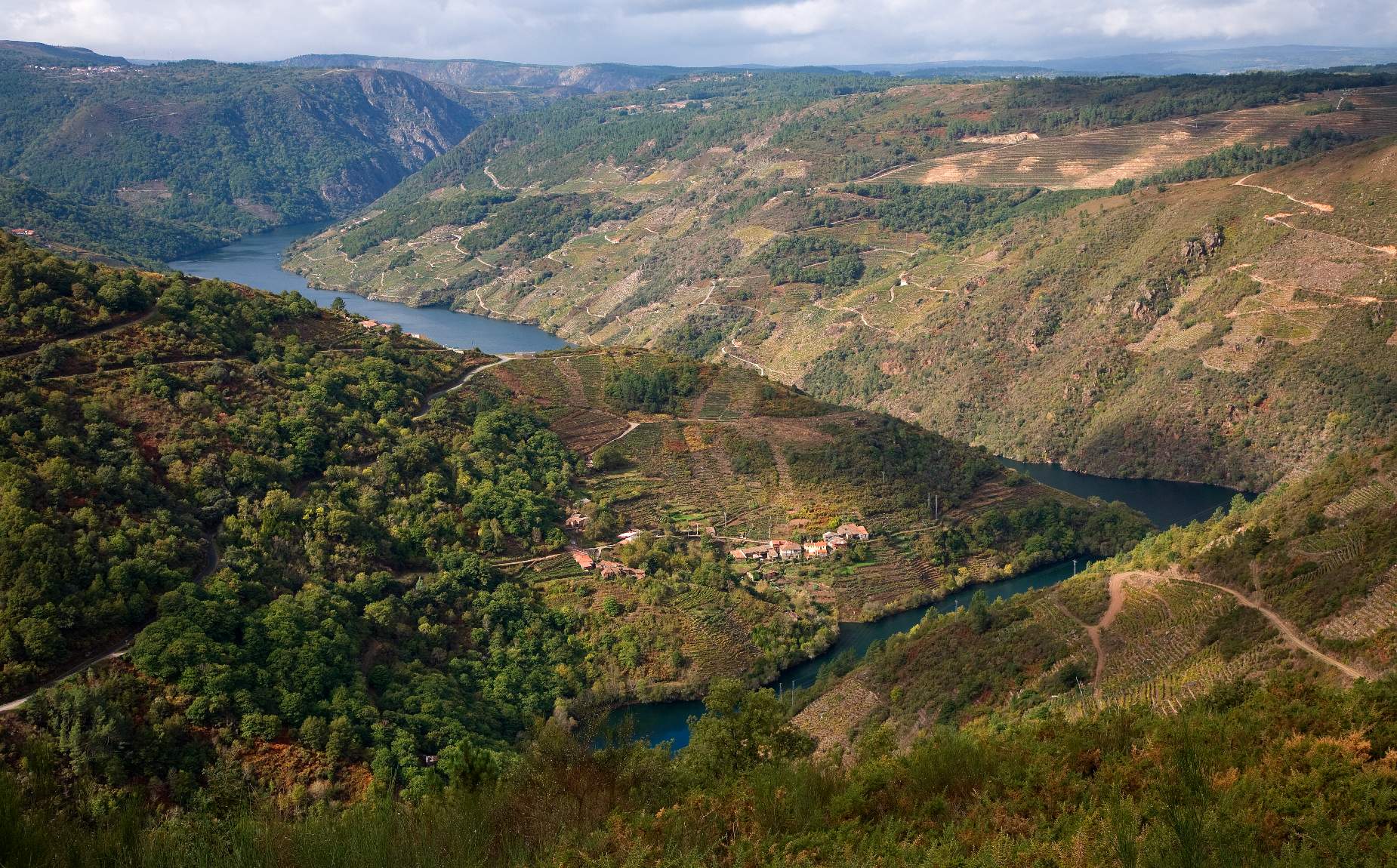
Straddling the provinces of Ourense and Lugo, the Miño, Cabe, Bibei, and Sil rivers wind their way through a rocky landscape steeped in history. The history of the rock itself—the first land on the Iberian Peninsula to emerge 300 million years ago— and that of those who came to these lands in search of the peace and tranquility that permeate the atmosphere. These religious orders settled in their own personal paradise and have left a legacy of unique religious heritage, with monasteries and churches of fascinating singularity. Before that, Roman hands cultivated the vineyards that remain an emblem of the Ribeira Sacra to this day.
In 2021, Ribeira Sacra and the Serras do Oribio e Courel became Galicia’s seventh UNESCO Biosphere Reserve, thereby consolidating the extensive network of these UNESCO designations in Galicia and highlighting the harmony between its inhabitants and the region’s magnificent natural environment. For their part, the Courel Mountains are part of the select Spanish Network of UNESCO Global Geoparks.
The southern part of the province of Lugo and the northern part of the province of Ourense meet in the central region, captivating visitors with a succession of first-rate historical, cultural, and natural attractions.Perhaps the most striking feature is the power of the landscape, led by the Sil Canyon and the banks of the Sil and Miño rivers, complemented by other rivers such as the Cabe, the Mao, and the Bibei. Landscapes of stone and water that invite you to enjoy them at a leisurely pace from any of the many designated overlooks, on foot via the network of trails, or in a more adventurous way through a wide range of active tourism options. From the air, on an unforgettable hot-air balloon ride, or from the water, aboard the region’s famous river cruises. The counterpoint to the sheer scale of these riverbanks is the abundance of small waterfalls and cascades hidden away, particularly in the Courel and the Southeastern Mountains, though some waterfalls reach heights of up to 40 meters (the Augacaída waterfall).
In such rugged terrain, the region’s villages (historic towns and settlements), monasteries (Santo Estevo de Ribas de Sil, Santa Cristina de Ribas de Sil, and San Salvador de Ferreira de Pantón), and churches (Santo Estevo de Ribas de Miño, San Miguel de Eiré, San Pedro de Rocas, etc.) and the exceptional wine this region produces from the Mencía, Brancellao, and Merenzao grape varieties for reds, and Godello, Albariño, and Treixadura for whites. A wine born of the effort required by “heroic viticulture,” which demands working the vineyards on the steep slopes of the landscape.And its 14 Singular Trees deserve special mention, among which two chestnut trees stand out: the thousand-year-old chestnut tree of Entrambosríos in Parada de Sil and the one in Rozavales in Manzaneda.
The Singular Trees are a visible symbol of the region’s rich botanical biodiversity, which can be found in places like the Devesa da Rogueira or the orchid micro-reserves (O Courel)—an outstanding destination for flora enthusiasts.Ribeira Sacra offers an unbeatable combination of landscape, wine tourism, and cultural heritage—in addition to the Romanesque architecture and the Ways of St. James mentioned above. Come and enjoy it. After all, you deserve a break.